

EP12 What to Write in a Trading Journal + Live Account Checklist (Season 1 Finale)
Going to the doctor without remembering where it hurts? That's what trading without a journal is like. In this Season 1 finale of the FxFriend Podcast, learn how to turn your Trading Journal into an honest coach and review our 3-category checklist before opening a live account.
EP12 What to Write in a Trading Journal + Live Account Checklist (Season 1 Finale)
Show Notes
▶️ Watch the video version on YouTube: https://youtu.be/sqLSSV4w9rY
Season 1 Finale: How to turn your Trading Journal into an honest coach (basic trade info, entry reasons, mindset, and key lessons), plus a 3-category pre-live account checklist summarizing all homework from Episodes 1–11.
Timestamps
- 00:00 Intro: The patient who forgot where it hurts
- 00:22 Season 1 Finale
- 00:46 1 · What is a Trading Journal? (Your honest coach)
- 01:13 2 · Basic info to record for every trade
- 01:40 3 · Recording your entry reasons
- 02:01 4 · Mindset logs + lesson learned column
- 02:41 Weekly/monthly reviews & tools to use
- 03:28 Checklist before opening a live account (Season 1 homework recap)
- 04:31 Host's take: Survive first, learn to make profits later
- 04:50 Summary
- 05:04 Season finale homework & Season 2 preview
Trading Journal Template (9 Columns)
| Date | Pair | Buy/Sell | Entry / SL / TP | Reason (Setup) | R:R | Result | Mindset | Lesson Learned |
|---|---|---|---|---|---|---|---|---|
| Oct 1 | XAUUSD | Buy | 2650 / 2635 / 2690 | Reversal candlestick at support + RSI Divergence | 1:2.6 | +Profit | Confident, followed plan | This setup works well during calm markets |
| Oct 2 | EURUSD | Sell | 1.0850 / 1.0875 / 1.0790 | Chased news, didn't wait for setup | 1:2.4 | -Loss | FOMO | Don't enter on news without confirmation |
Review weekly and monthly: Win Rate · Average RR · Expectancy · Max Drawdown (you need at least 30–50 trades to see real patterns)
Checklist Before Opening a Live Account (Season 1 Homework Recap)
Category 1 · Broker & Terms Check
- Verify license numbers on regulator websites, ask about segregated accounts and withdrawal times (EP02)
- Collect 5 key pieces of evidence from day one (EP05)
- Read 3 essential bonus conditions (EP06)
- Check for scam red flags (EP07)
- Know your account's Margin Call / Stop Out levels (EP08)
- Know withdrawal fees and Swap rates (EP09)
Category 2 · Risk Control
- Learn to read price charts and news first (EP01)
- Calculate position size using ATR, risk 1% per trade (EP03)
- Avoid adding to losing positions (EP04)
- Calculate Expectancy before trusting any strategy (EP10)
Category 3 · Mindset Control
- Stick 3 Golden Rules next to your screen (EP11)
- Keep a Trading Journal (EP12)
Season Finale Homework (No Deposit Needed)
Create a 9-column table using the template above, and log every trade from now on (demo account is fine) until you reach 30 trades.
Read Full Articles
- What is a Trading Journal? What to log + practical template examples
- Previous episode: EP11 FOMO and Revenge Trading
- Share your homework results on the FxFriend Forum
Next Season: Season 2 Read Charts Like a Pro, launching with EP13 Support and Resistance
This content is for educational purposes only and does not constitute investment advice. Table examples are for illustration. Trading Forex, gold, and crypto involves high risk.
Transcript
Related Episodes

EP01 Day Zero: What is Forex? Start Forex Trading from Zero in 8 Minutes
What is Forex? In the first episode of FxFriend Podcast, we take you from zero to understanding the world's largest financial market, how it differs from stocks, and why currency prices move. Learn about the 3 currency pair groups (Majors, Crosses, Exotics) and 4 essential terms every beginner needs to know—pip, spread, leverage, and margin—all explained simply in just 8 minutes.

EP02 How to Choose a Forex Broker Without Getting Burned: 8-Point Checklist
How do you choose a Forex broker without getting burned? Check these 8 essential points grouped into safety, costs/systems, and support before opening a live account.

EP03 Stop Asking How Many Lots, Ask How Much Risk: Position Sizing with ATR
Why is trading 0.1 Lot every time not real discipline? In Episode 3 of FxFriend Podcast, learn Position Sizing using ATR to keep your monetary risk consistent regardless of market volatility.
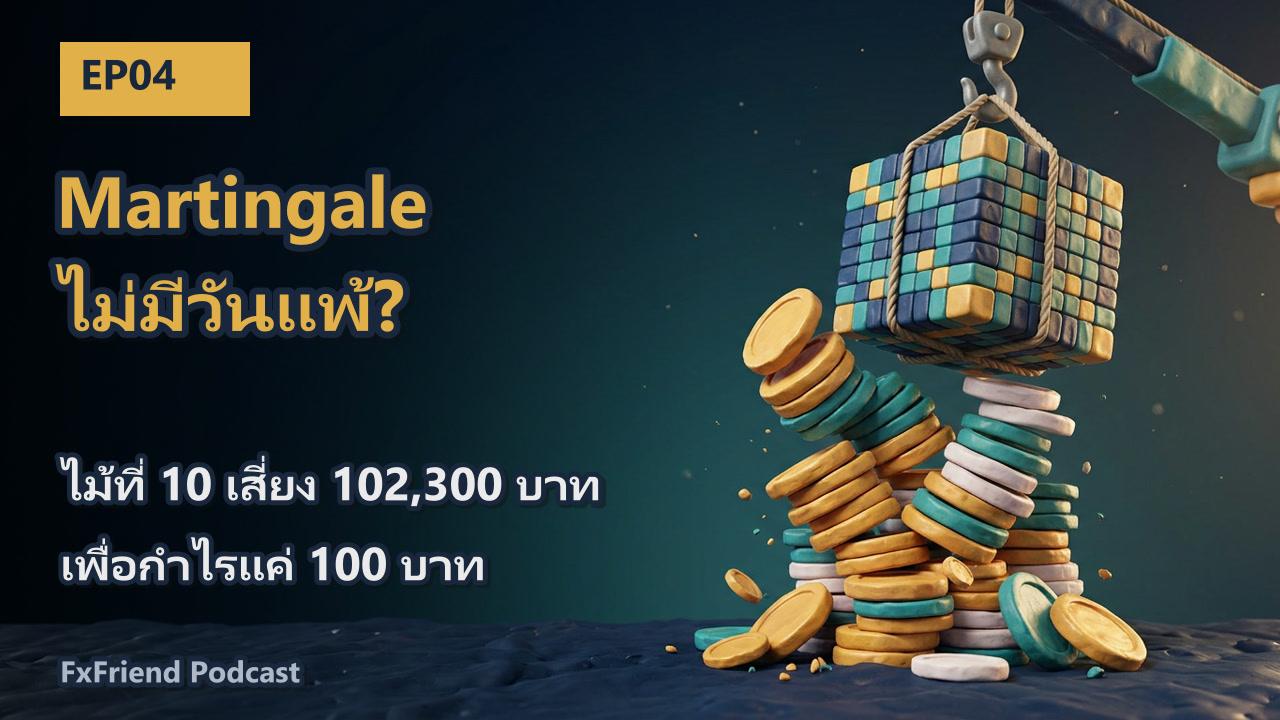
EP04 Martingale: The System That Never Loses... Until It Loses Everything
What is Martingale and why does doubling down after every loss seem unbeatable? In Episode 4 of the FxFriend Podcast, we break down the math behind doubling position sizes, why a beautiful equity curve can crash in a single day, how to spot hidden Martingale in EAs, and safer alternatives.


