

EP10 Risk-Reward vs Win Rate: Why Winning Often Won't Grow Your Account
Winning rock-paper-scissors 9 out of 10 times doesn't help if the single loss means paying for the whole Thai BBQ dinner. FxFriend Podcast EP10 breaks down why a high Win Rate doesn't mean your account grows, showing how to calculate Expectancy alongside Risk-Reward Ratio (RR).
EP10 Risk-Reward vs Win Rate: Why Winning Often Won't Grow Your Account
Show Notes
▶️ Watch the video version on YouTube: https://youtu.be/ULiLv4LrEOs
Winning rock-paper-scissors 9 out of 10 times doesn't help if the single loss means you have to pay for the whole Thai BBQ dinner. In this episode, we explain why a high Win Rate doesn't automatically grow your account. You need to look at it together with Risk-Reward Ratio (RR) and calculate your Expectancy, complete with a comparison table between 75% and 35% Win Rate systems, breakeven win rates, the dangerous trap of moving your Stop Loss, and 5 tips to balance your strategy.
Timestamps
- 00:00 Intro: Winning rock-paper-scissors 9 out of 10 times... but you get stuck with the bill
- 00:14 Getting started: Even with zero fees, your system might not make money
- 00:33 1 · Win Rate and the "winning often" trap
- 01:18 2 · Risk-Reward Ratio (RR)
- 01:41 3 · Expectancy: System A (75%) vs System B (35%)
- 02:33 Breakeven Win Rate
- 02:52 The Trap: Moving Stop Loss away + how costs eat up low-profit systems
- 03:30 5 ways to rebalance your system
- 03:56 Why our brains are obsessed with Win Rate
- 04:09 Host's Take: Win Rate is a feeling, Expectancy is real money
- 04:25 Summary
- 04:39 Homework (with a brain teaser) and next episode preview
System Comparison Table (Article Example)
| System | Win Rate | RR | Expectancy per Trade |
|---|---|---|---|
| A (High Win Rate) | 75% | 1:0.5 | (0.75×0.5) − (0.25×1) = 0.125 |
| B (Low Win Rate) | 35% | 1:3 | (0.35×3) − (0.65×1) = 0.40 |
Breakeven Win Rate = 1 ÷ (1 + RR)
- RR 1:1 → Need 50% Win Rate
- RR 1:2 → Win around 33% to break even
- RR 1:0.5 → Need almost 67% Win Rate
5 Tips to Balance Your Trading System
- Log every single trade along with your actual RR
- Don't set Take Profit targets too close just to chase a high Win Rate · Calculate your breakeven Win Rate first
- Deduct costs (spread, commission, slippage) before calculating RR
- Never move your Stop Loss further away from price
- Backtest across various market conditions
Homework (No Deposit Required)
If you have trading history: Review your last 20 trades. Calculate your Win Rate, average winning trade vs average losing trade, and calculate your Expectancy. · If you don't have trading history: Try this riddle—You win 6 trades making $50 each, and lose 4 trades losing $100 each. You won more trades than you lost, but did your account balance go up or down?
Read Full Article & Related Links
- RR and Win Rate Go Hand in Hand: Why Winning Often Won't Grow Your Account
- Previous episode: EP09 Hidden Costs of Trading
- Share your homework results on the FxFriend Forum
This content is for risk management education only and does not constitute investment advice. Numbers used are for illustrative purposes. Trading Forex, Gold, and Crypto carries high risk.
Transcript
Related Episodes

EP01 Day Zero: What is Forex? Start Forex Trading from Zero in 8 Minutes
What is Forex? In the first episode of FxFriend Podcast, we take you from zero to understanding the world's largest financial market, how it differs from stocks, and why currency prices move. Learn about the 3 currency pair groups (Majors, Crosses, Exotics) and 4 essential terms every beginner needs to know—pip, spread, leverage, and margin—all explained simply in just 8 minutes.

EP02 How to Choose a Forex Broker Without Getting Burned: 8-Point Checklist
How do you choose a Forex broker without getting burned? Check these 8 essential points grouped into safety, costs/systems, and support before opening a live account.

EP03 Stop Asking How Many Lots, Ask How Much Risk: Position Sizing with ATR
Why is trading 0.1 Lot every time not real discipline? In Episode 3 of FxFriend Podcast, learn Position Sizing using ATR to keep your monetary risk consistent regardless of market volatility.
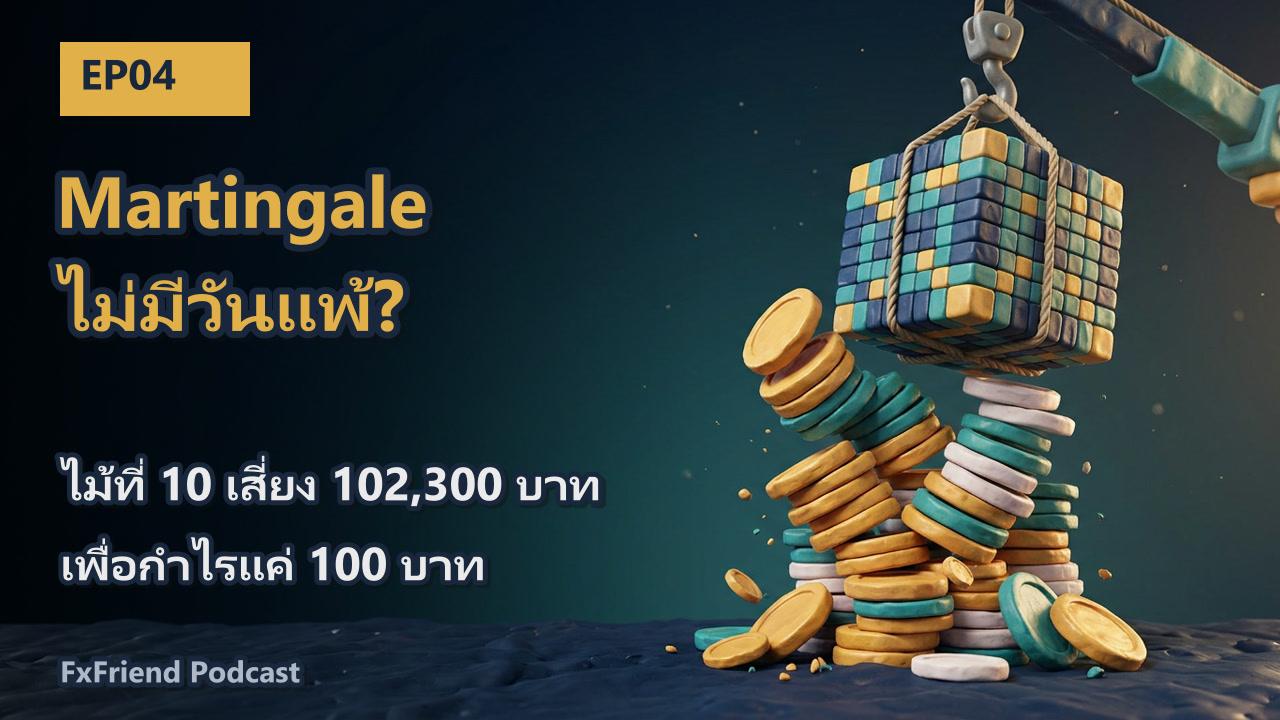
EP04 Martingale: The System That Never Loses... Until It Loses Everything
What is Martingale and why does doubling down after every loss seem unbeatable? In Episode 4 of the FxFriend Podcast, we break down the math behind doubling position sizes, why a beautiful equity curve can crash in a single day, how to spot hidden Martingale in EAs, and safer alternatives.


